For many beginners, hearing "1, 2, 3, tap" feels like trying to solve a puzzle while someone fast-forwards the track. But here is the secret: you should not be counting numbers in your head. You should be listening to the instruments.
Understanding Bachata musicality is the defining difference between doing steps on a dance floor and truly expressing music. At our Bachata classes in Zurich, we emphasize moving away from counting and moving toward feeling. For the full sound foundation, read our guide to Bachata music and dance. Let's break down the secret language of Bachata so you can find the "1" automatically.
The Core Instruments of Bachata
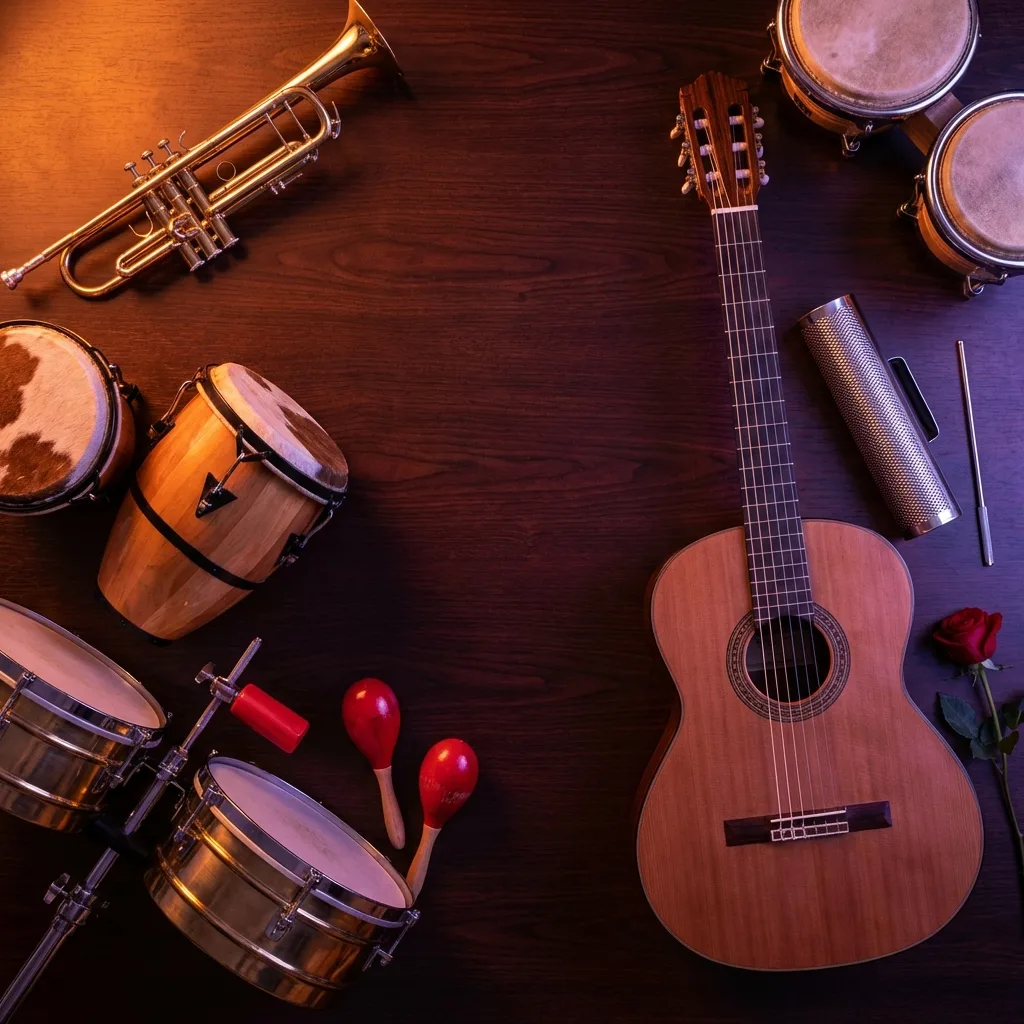
The Bongo
The heartbeat of the dance. In the basic step, the bongo provides the deep "martillo" pattern. The sharp hit (the martillo) lands right on the 4 and the 8—the exact moment you tap.
The Güira
The metallic scraping sound driving the rhythm forward. It acts like a metronome, keeping the energy high, especially during the fast-paced "Mambo" sections.
The Bass Guitar
The foundation underneath. The bass emphasizes the "1," the "3," and the "4." Listening for its heavy plunge is one of the easiest ways to center yourself back on the "1."
The Requinto (Lead Guitar)
The emotion. This is the melody that tells the story. While the bongo keeps you on time, the requinto dictates your styling, body movement, and feeling.
How to Translate Sound to Movement
To truly find the 1, you must let your body respond to the distinct sections of a Bachata song: the Derecho, the Majao, and the Mambo. We cover these essential concepts extensively in our beginner guide.
The Derecho: The verses. This is smooth, intimate, and grounded. The bongo is steady. You dance your basic steps smoothly.
The Majao: The chorus. The energy lifts. The bongo player switches from striking the skin with hands to hitting it with sticks (or playing the cowbell in modern tracks). Here, your energy should expand.
The Mambo: The instrumental section. High energy, sharp hits, fast footwork. This is the peak of the dance.

If you ever lose the "1," simply pause. Do not panic. Listen for the strong, low note of the bass, or wait for the singer to begin a new phrase. Music works in 8-count blocks. Take a breath, wait for the next phrase to start, and step boldly on the 1. Mastering this takes practice, which is why we invite you to refine your ear at our upcoming classes.
Master the Music
Are you ready to stop counting and start dancing? Join our foundation classes to build your confidence and musicality. View our Bachata schedule or register for our courses in Zurich.
BOOK YOUR FREE TRIAL